
We've said a version of this sentence in almost every guide we publish, because it's the single most under-appreciated truth in the countertop industry: fabrication quality matters more than material choice. The identical slab of granite, installed by two different shops, can look and perform completely differently — one with tight, nearly invisible seams and a polished edge that catches light evenly, the other with a lippy seam that catches every dish rag and an edge that was rushed through polishing. Our materials comparison and best-materials guide both end with the same warning, because homeowners consistently spend weeks researching quartz versus granite and five minutes choosing who actually cuts and installs it.
This guide flips the research priority. Here's exactly what to ask a fabricator before signing anything, the specific red flags that predict a bad experience, and how to evaluate a quote beyond its bottom-line number. Whether you're planning a full countertop replacement, a bathroom vanity, or an outdoor kitchen, the fabricator you choose determines whether the project you researched so carefully actually delivers.
Why Fabrication Quality Matters More Than the Slab
Stone counters fail — or disappoint — in specific, predictable places, and almost none of them trace back to the material itself. Seams are the most common complaint: a poorly matched or poorly placed seam is visually jarring and physically collects grime over years of use, while a well-executed seam nearly disappears. Edge polish quality shows up every time light hits the counter at an angle — a rushed polish leaves subtle unevenness that's hard to describe but easy to notice once you've seen a proper one. Sink support matters enormously for undermount installations, since inadequate bracing can eventually stress the stone around the cutout. Overhang support on islands and peninsulas determines whether an unsupported span holds up to leaning, sitting, or the occasional forgotten stack of cookbooks.
None of these are material properties — they're craft decisions made by the specific people templating, cutting, and installing your counter. This is exactly why we recommend spending real time vetting a fabricator, using the same rigor you'd apply to comparing granite against quartz.
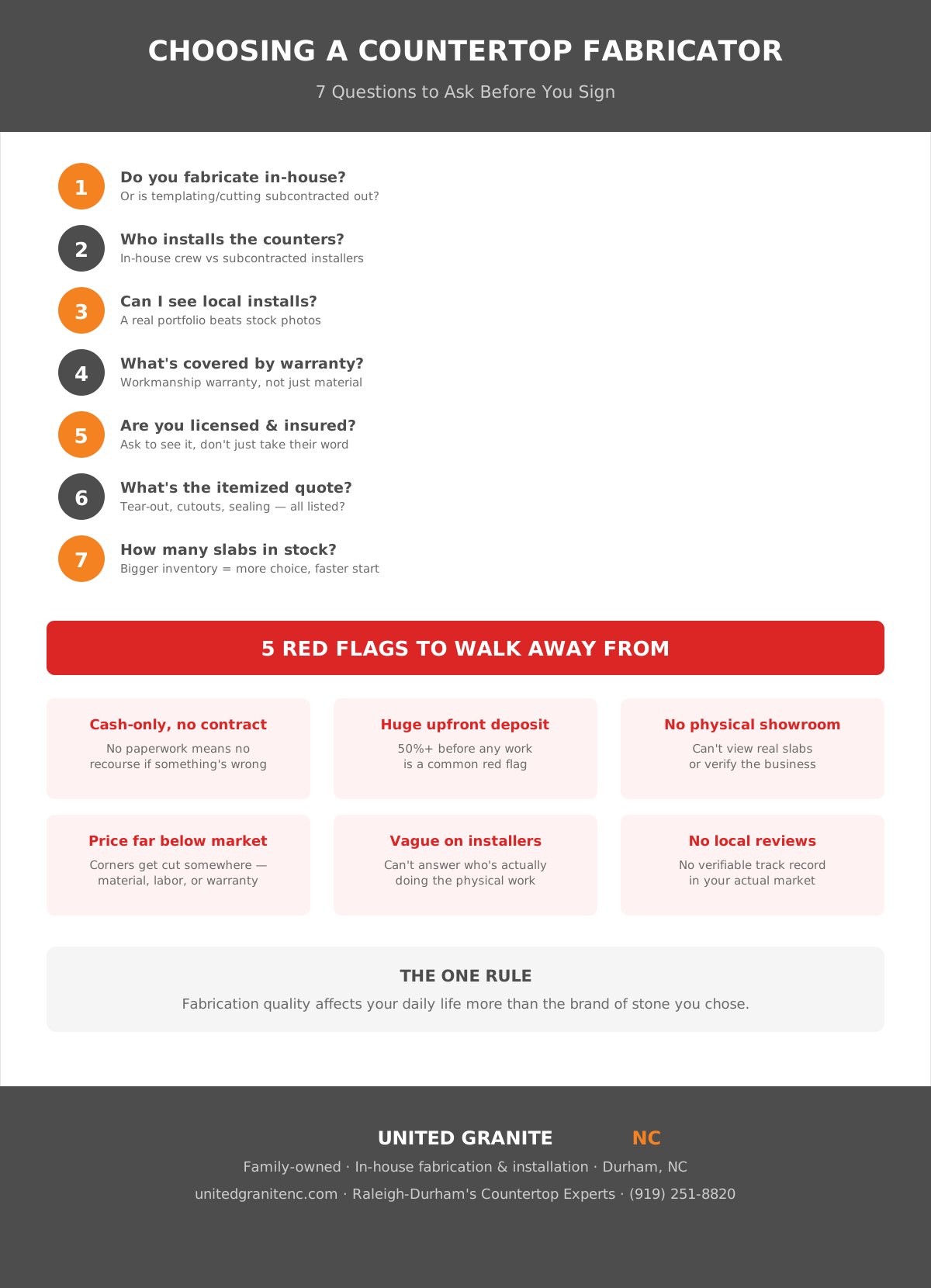
Question 1: Do You Fabricate In-House?
Some businesses that sell countertops don't actually cut or polish the stone themselves — they broker the sale and subcontract fabrication to a separate shop, sometimes one you'll never meet or vet. There's nothing inherently wrong with subcontracting if the relationship is stable and the subcontractor is skilled, but it adds a layer of accountability distance between you and the people whose hands actually shape your stone. Ask directly: does your team template, cut, and polish the slabs in your own facility, or is that work sent elsewhere? An honest answer either way tells you something important — a company that hedges on this question is worth a follow-up.
Question 2: Who Physically Installs the Countertop?
This is the second half of the same accountability question, and it matters just as much. A beautifully fabricated slab installed by a rushed, subcontracted crew unfamiliar with that specific shop's standards can still result in an uneven seam, a poorly caulked joint, or inadequate cabinet-leveling before the stone goes down. Ask whether the installation crew works directly for the company you're hiring, and how much experience they have installing your specific chosen material — natural stone, porcelain, and engineered quartz genuinely require different handling techniques, and a crew experienced with one isn't automatically equally skilled with all three.
Question 3: Can I See Real Local Installations?
Marketing photos and manufacturer stock images tell you what a material can look like in ideal conditions — they tell you nothing about how a specific fabricator's actual work holds up in actual homes. Ask to see a portfolio of local projects, ideally with enough detail to judge seam placement and edge quality up close, not just wide-angle glamour shots. Better still, ask for references you can actually call, or read verified local reviews rather than a generic star rating with no context. A shop confident in its work will make this easy; one that's evasive or offers only carefully curated wide shots is telling you something.
Question 4: What Does Your Warranty Actually Cover?
There are two separate warranties in play on any countertop project, and conflating them is a common, costly mistake. The manufacturer's material warranty (covered by brand in our quartz brand comparison) covers defects in the slab itself. The fabricator's workmanship warranty covers the installation — seam integrity, sealant, sink mounting, and structural support — and this is the warranty that actually protects you against the fabrication-quality issues discussed above. Ask specifically what the workmanship warranty covers, for how long, and what voids it. A fabricator who can't answer this clearly, or who only points to the manufacturer's warranty when asked, isn't standing behind their own labor.
Question 5: Are You Licensed and Insured?
This sounds like a formality until something goes wrong — a dropped slab damages your floor, an installer is injured in your home, or a dispute over workmanship needs resolution. Ask to see proof of licensing and liability insurance, not just a verbal confirmation. A legitimate, established fabricator will have this readily available and won't hesitate to provide it; reluctance here is one of the clearest red flags in this entire guide.
Question 6: Is the Quote Fully Itemized?
A countertop quote that lists only a single lump-sum number invites surprises. A trustworthy itemized quote breaks out material cost per square foot, edge profile, sink and faucet cutouts, tear-out and haul-away of old counters, template and installation labor, and sealing for natural stone. This detail lets you compare quotes apples-to-apples across different fabricators rather than being misled by a lower bottom-line number that quietly excludes tear-out or charges extra for cutouts after the fact. Our own pricing guide walks through every line item that should appear on a legitimate quote — use it as a checklist when comparing bids.
Question 7: How Much Inventory Do You Actually Stock?
A fabricator's on-hand slab inventory tells you two things at once: how established the business is, and how quickly your project can actually move forward. A shop with a large, current inventory — we keep 120+ slabs across 2,000+ available colors on hand at our Durham showroom — lets you view and tag your actual slab in person immediately rather than ordering blind from a catalog and waiting weeks for a special order to arrive. It's also a practical signal of financial stability; maintaining substantial inventory requires real capital investment that fly-by-night operations typically can't sustain.
What Happens After the Sale: Support You Should Expect
A fabricator relationship doesn't end the day installation crews pack up their tools, and how a company handles the weeks and years afterward tells you as much as anything during the sales process. Ask what happens if a seam settles slightly, if a corner chips during normal use, or if a question comes up about sealing schedule six months down the road. Established fabricators typically offer a punch-list walkthrough shortly after installation to address any small issues while the crew's work is fresh, and maintain records of your specific stone and sealer so future questions or touch-ups don't require re-explaining your entire project from scratch.
This is also where the earlier questions about in-house teams pay off most visibly. A fabricator whose own crew handled your template, fabrication, and installation can troubleshoot a problem with full context of exactly how your project was built. A company that subcontracted pieces of the job may need to coordinate between multiple parties to resolve even a minor issue — a genuinely slower, more frustrating process when you're the one waiting for an answer.
Timeline Honesty: What a Realistic Schedule Sounds Like
Every fabricator wants to win your business, and an unrealistically fast timeline is one of the easiest ways to make a quote sound more attractive without actually being more accurate. As detailed in our replacement process guide, a realistic countertop project runs roughly one to two weeks from template to installation, with fabrication itself typically taking five to ten business days depending on material and complexity. A fabricator promising same-week installation on a custom natural-stone project, without qualifying it, is either working with unusually light current demand or setting an expectation they may not meet.
The more trustworthy pattern is a fabricator who gives you a realistic range upfront, explains what could push the timeline (custom slab sourcing, complex cutout requirements, seasonal demand), and communicates proactively if something shifts rather than going quiet until you call asking for an update. Timeline honesty during the sales conversation is a reasonably reliable preview of communication quality during the actual project.
Five Red Flags That Predict a Bad Experience
- Cash-only, no written contract. Legitimate businesses put terms, timelines, and warranty coverage in writing. A cash-only arrangement with no paperwork leaves you with no recourse if something goes wrong.
- Demanding a large upfront deposit. Some deposit is normal to secure materials and schedule fabrication, but a request for 50% or more before any work begins, especially paired with vague timelines, is a common pattern in unreliable operations.
- No physical showroom or slab yard you can visit. If you can't see real slabs in person or verify the business has a genuine physical presence, you can't properly vet materials, and you have far less recourse if a dispute arises later.
- Pricing dramatically below every other quote. Countertop fabrication has real, fairly consistent cost floors for material and labor. A bid far below the market average usually means corners are cut somewhere — material quality, installer experience, or warranty coverage.
- Vague or evasive answers about who does the actual work. If a salesperson can't clearly explain who templates, fabricates, and installs your project, that ambiguity usually reflects a genuinely fragmented, hard-to-hold-accountable process.
Local vs National: Does Company Size Matter?
Homeowners sometimes assume a larger, multi-market company automatically means more reliability, but the relationship runs the opposite direction more often than not. A locally established, family-owned fabricator has direct accountability to the community they work in — reputation in a specific market like the Raleigh-Durham Triangle is built and maintained project by project, referral by referral, in a way that's harder to fake or outrun than an online presence spanning dozens of disconnected markets. National chains and franchise-style operations can offer real advantages in marketing reach and standardized processes, but they also frequently rely more heavily on subcontracted local labor for the actual fabrication and installation, reintroducing the accountability gap covered earlier in this guide.
Neither structure guarantees quality on its own — the seven questions in this guide matter regardless of company size. But if two fabricators answer those questions equally well, local ownership with an established regional track record and in-house crews is generally the safer bet, simply because the incentive to protect a specific, singular local reputation runs deeper than protecting a brand name spread across many markets.
Reading Reviews the Right Way
Star ratings alone tell you less than the substance behind them. When researching a fabricator, look specifically for reviews that mention the details covered in this guide: seam quality, communication during the process, whether the installation crew showed up on time and finished as scoped, and how the company handled any problems that arose. A shop with a handful of detailed, specific positive reviews describing the actual fabrication and installation experience is generally more trustworthy than one with hundreds of generic five-star ratings with no detail — the latter pattern sometimes indicates incentivized or purchased reviews rather than organic feedback from real customers.
Also worth checking: how a company responds to negative reviews, if any exist. No fabricator handling hundreds of projects a year has a flawless record, and a thoughtful, accountable response to a legitimate complaint says more about a company's character than the absence of any criticism at all.
What a Good Consultation Actually Looks Like
A trustworthy fabricator's process, whether at first contact or during your showroom visit, tends to follow a recognizable pattern: they ask real questions about how you use your kitchen before recommending a material, they're transparent about timeline and what could extend it, they walk you through the itemized quote line by line rather than rushing to a signature, and they're upfront about their own limitations — a shop that can fabricate porcelain expertly but is still building experience with a newer material should say so rather than claim universal expertise. Our own process page documents exactly this rhythm: quote, consultation, template, fabrication, and installation, each step with a clear owner and timeline.
Pay attention, too, to how a company answers uncomfortable questions — pricing pushback, timeline concerns, or a direct question about subcontracting. Defensiveness or vague redirection is worth noting; a straightforward, specific answer, even when it's not the answer you hoped for, is a good sign of a business that operates with integrity day to day, not just during the sales pitch.
Questions to Ask Yourself Before You Even Start Shopping
Vetting a fabricator well starts with knowing what you actually need, and a few minutes of honest self-assessment before your first showroom visit makes every conversation afterward more productive. Have you settled on a material family, or do you need a fabricator willing to walk you through options patiently rather than push a preferred product? Do you have a firm timeline (an upcoming holiday, a sale closing date) that needs to be stated upfront rather than discovered as a scheduling conflict later? Is your project straightforward — a standard kitchen replacement on existing cabinets — or does it involve complexity like a waterfall island, full-height backsplash, or outdoor installation that not every shop handles equally well?
Bringing clear answers to these questions, even loose ones, changes the quality of the consultation you receive. A good fabricator will ask most of these questions themselves if you don't raise them first — which is itself one more small signal of a company that's genuinely trying to scope your project correctly rather than rushing toward a signature.
Comparing Multiple Quotes the Right Way
Getting two or three quotes is smart practice, but comparing them correctly matters as much as gathering them. Line up each quote's itemized breakdown side by side rather than comparing bottom-line totals alone — a lower total that excludes tear-out, sink cutouts, or sealing isn't actually cheaper once those costs surface later. Confirm each quote specifies the same edge profile, the same sink mounting style, and comparable material tiers within your chosen brand or stone type, since a quote for entry-level granite will naturally undercut one for a premium quartzite even from the exact same fabricator.
Finally, weigh the answers to the seven questions above alongside price rather than after it. The lowest bid from a fabricator who subcontracts installation, offers no workmanship warranty, and can't show local references isn't actually the better deal — it's a different, riskier bet dressed up as savings.
Why We Answer These Questions the Way We Do
We're a family-owned fabricator based in Durham, and we template, fabricate, and install every project with our own team — no subcontracted installers handling the final step of a job we don't fully control. We keep 120+ slabs in stock across 2,000+ available colors so you can see and tag your actual stone rather than ordering blind, and our portfolio shows real Triangle-area installations rather than manufacturer stock photography. We're happy to answer every question in this guide directly and in writing — that's exactly the standard we'd want if we were the ones hiring.
Get Started With a Trustworthy Quote
The best way to evaluate any fabricator, including us, is to ask the questions in this guide directly and see how the conversation goes. Visit our showroom to see our in-stock inventory and meet the team who'll actually handle your project — we serve the entire Triangle, from Raleigh and Durham to Cary, Apex, Chapel Hill, and beyond. Browse real local installations in our portfolio, review our step-by-step process, or start with a free quote — we'll walk you through an itemized estimate, usually within one business day.