Once you've decided on engineered quartz — and given its zero-maintenance appeal, a lot of homeowners do — a second decision appears that nobody warns you about: which brand? Walk into any showroom and you'll find Cambria, Silestone, Caesarstone, and MSI Quartz sitting side by side, all claiming to be the best quartz money can buy. They can't all be right, and yet in a narrow sense, they kind of are: all four are genuinely durable, non-porous engineered stone built from crushed quartz and resin. The differences that actually matter live in warranty terms, color range, sustainability practices, and price — not in some hidden performance gap.
We're in a useful position to referee this one honestly: United Granite NC is an authorized dealer for all four brands. We don't have a favorite to push — we have a warehouse full of all of them and years of installing each one in real Triangle-area kitchens. This guide breaks down what actually separates Cambria, Silestone, Caesarstone, and MSI Quartz, so you can walk into the showroom already knowing which conversation to have.
The Quick Answer: All Four Are Good Quartz
Before the brand-by-brand detail, the honest headline: the performance floor across all four brands is high. Each is roughly 90%+ ground quartz bound with polymer resin, each is non-porous and never needs sealing, each resists stains and scratches far better than laminate or tile, and each carries the same heat sensitivity common to every engineered quartz (trivets always — see our quartzite vs quartz breakdown for why). If you picked a color at random from any of the four and installed it correctly, you'd end up with a durable, beautiful counter. The decision genuinely is about design range, brand priorities, and budget — which is exactly what the rest of this guide covers.
Cambria: The American-Made Flagship
Cambria is the only major quartz brand manufactured entirely in the United States — family-owned, based in Minnesota, and proud of it. That domestic story resonates with buyers who care about supply chain and provenance, but the brand backs it with substance, not just marketing: Cambria's slabs run roughly 93% natural quartz, among the highest quartz content in the category, contributing to their diamond-like hardness claim. The surface is NSF-certified for food preparation, meaning it meets food-safety standards used in commercial kitchens — a detail that matters if you cook seriously or ever consider a home food business.
Cambria backs every slab with a lifetime limited warranty, among the strongest guarantees in the industry, and offers one of the most extensive design libraries available — hundreds of colors spanning marble-look veining, solid contemporary tones, and design-collaboration collections. The trade-off is price: Cambria typically sits at the premium end of the quartz spectrum, reflecting both domestic manufacturing costs and the brand's design R&D. For buyers who want top-tier warranty backing, a Made-in-USA story, and one of the deepest catalogs in the business, Cambria is usually the first name mentioned in the showroom — and often the last one crossed off the list.
Silestone: The Sustainability & Technology Leader
Silestone, manufactured by the Spanish surfaces giant Cosentino, built its reputation on two pillars: technology and sustainability. Its slabs run around 90-95% crushed quartz bonded with polymer resin under intense heat and pressure — the manufacturing process the whole category descended from — yielding an extremely dense, uniform surface. Silestone was also the first major brand to pursue serious sustainability certifications, and its newer HybriQ+ technology reduces crystalline silica content in the mix while incorporating recycled water and reclaimed material into production — a genuinely different manufacturing philosophy that appeals to environmentally conscious buyers without sacrificing performance.
With over 40 colors and a 25-year warranty, Silestone lands as scratch-resistant as any brand here — the marketing claim of being 'harder than stainless steel' checks out against typical steel utensils and cookware — and it's positioned at a solidly mid-range price point, generally more accessible than Cambria while still trading on premium-brand recognition. If sustainability credentials matter to your purchase decision, or you want a brand with a genuine technology story behind the slab, Silestone is the strongest answer among the four.
Caesarstone: The Original, Still the Widest Range
Caesarstone has a claim none of the others can make: it invented the category. Founded in Israel in 1987, Caesarstone was the first company to bring engineered quartz countertops to market, and nearly four decades later it still offers what it calls the industry's widest range of colors — a genuinely enormous catalog spanning ultra-realistic marble looks, bold solid colors, and textured finishes most competitors haven't matched. Slabs run around 93% natural quartz, engineered through a patented process designed to eliminate the imperfections found in natural stone entirely.
Caesarstone backs its slabs with a lifetime warranty, matching Cambria's top-tier guarantee, while typically pricing in the same mid-range territory as Silestone — making it, dollar for dollar, one of the strongest value propositions among the premium brands when you weight warranty and color range together. Because it's been manufacturing longer than any competitor here, Caesarstone also tends to have exceptionally consistent quality control between batches — a genuine advantage if your project needs multiple slabs to match seamlessly across a large kitchen. For buyers who want maximum design choice backed by the deepest manufacturing experience in the category, Caesarstone is hard to beat.
MSI Quartz: The Value Leader With Real Range
MSI Quartz plays a different game than the other three: rather than manufacturing under one unified brand identity, MSI is one of the largest surface distributors in North America, sourcing quartz production to deliver a huge selection of colors and patterns at consistently competitive prices. The engineering fundamentals hold up — durable, low-maintenance, stain and scratch resistant, available in styles that span from classic marble looks to contemporary solids — but MSI's business model is built around value and volume rather than flagship-brand premium positioning.
That shows up honestly in two places: warranty terms are typically more limited than Cambria's or Caesarstone's lifetime coverage, and MSI doesn't carry the same singular design-house identity — you're choosing from a broad, ever-updating catalog rather than one brand's curated vision. What you get in return is genuinely the best price-to-performance ratio of the four, which is exactly why MSI Quartz is our most common recommendation for first homes, rental properties, budget-conscious full-kitchen projects, and any client whose priority is 'good quartz, sensible price' over brand prestige.
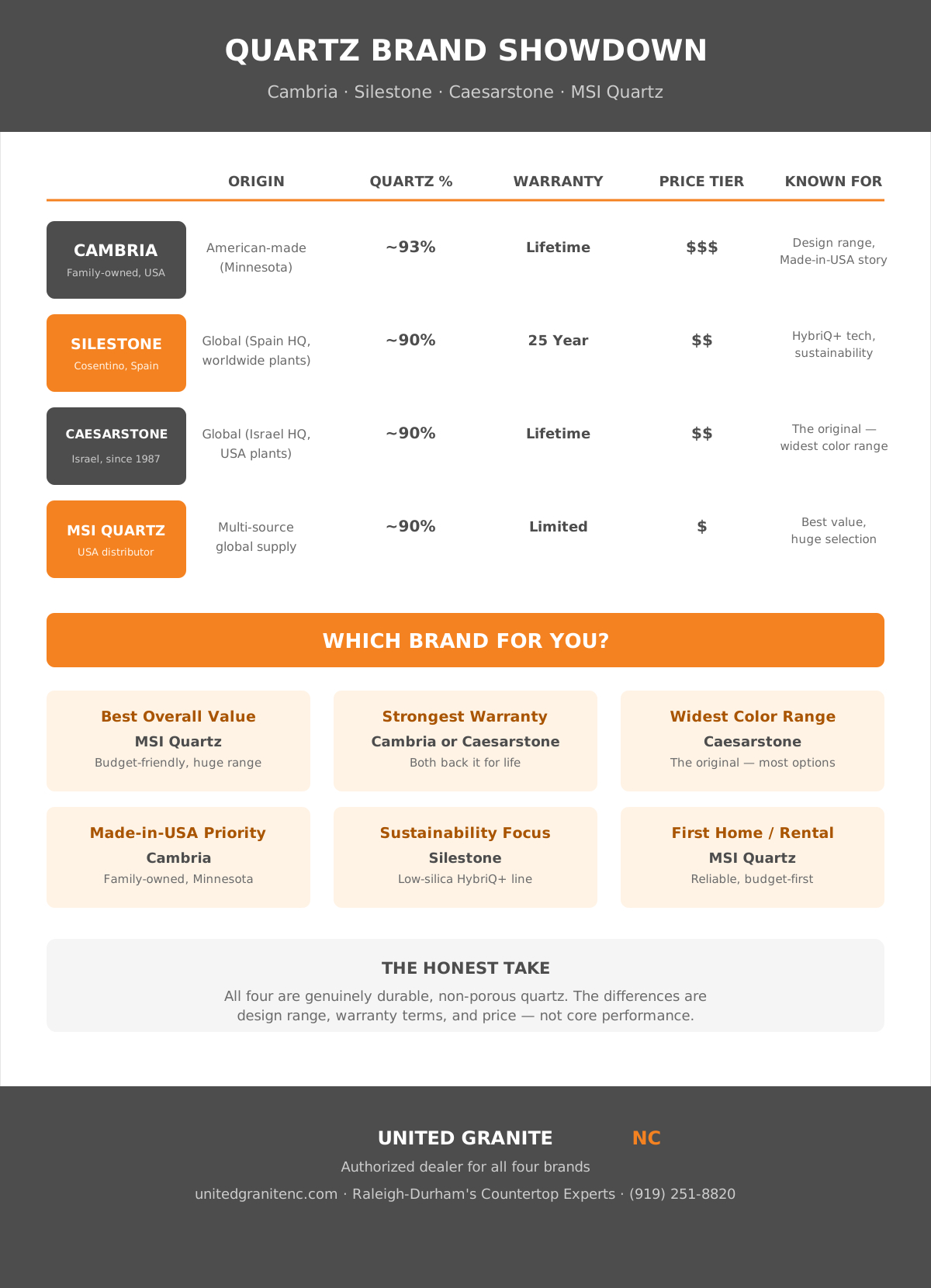
Side-by-Side: The Full Comparison Table
| Brand | Origin | Quartz Content | Warranty | Price Tier | Standout Strength |
|---|---|---|---|---|---|
| Cambria | USA (Minnesota) | ~93% | Lifetime | $$$ | Made-in-USA, deep catalog |
| Silestone | Spain (Cosentino) | ~90-95% | 25 Year | $$ | Sustainability & tech (HybriQ+) |
| Caesarstone | Israel, est. 1987 | ~93% | Lifetime | $$ | Widest color range, the original |
| MSI Quartz | USA distributor | ~90% | Limited | $ | Best value, huge selection |
Warranty: Reading the Fine Print
Warranty length gets quoted like a trump card, but the terms matter more than the headline number. Lifetime warranties (Cambria, Caesarstone) generally cover manufacturing defects — cracking, staining, or discoloration under normal residential use — for as long as you own the home, which is genuinely valuable peace of mind on a surface you're keeping for decades. Silestone's 25-year term covers the same categories for a defined, still-generous window. MSI's limited warranty typically runs shorter and narrower in scope, reflecting its distributor model rather than single-manufacturer accountability.
In practice, warranty claims on any of these four brands are rare when the material is properly fabricated and installed — the everyday risks (heat marks, chips from impact, improper cleaning chemicals covered in our stain removal guide) are typically excluded from every manufacturer's warranty regardless of brand, since they're use issues rather than manufacturing defects. Read the actual document before treating warranty length as the deciding factor — and remember that your fabricator's installation warranty (covering workmanship, seams, and sealing where applicable) often matters more day-to-day than the manufacturer's material warranty.
Color & Design Range: What Each Brand Does Best
If a specific look is driving your decision, brand choice narrows fast. Chasing the 2026 warm-neutral trend? All four brands have leaned into creamy marble-look designs, but Caesarstone's decades-long catalog and Cambria's design-collaboration collections tend to offer the deepest bench of options within that aesthetic. Want a bold solid color or a concrete-look surface? Caesarstone and Silestone both push hard into contemporary solids. Building on a tight budget but still want real design variety? MSI's catalog is larger than people expect, spanning most popular looks at a lower price point — you're simply choosing from a broader, less curated pool.
The practical move: pick your aesthetic first using our design trends guide or materials comparison, then let us show you which of the four brands executes that look best at your budget. Brand loyalty before design direction gets the decision backward.
Sustainability: Does It Actually Differ?
Yes, genuinely — this is one of the real differentiators rather than marketing noise. Silestone's HybriQ+ line specifically reduces crystalline silica content and incorporates recycled water and reclaimed raw materials into manufacturing, addressing both environmental impact and the fabrication-industry silica-exposure conversation that's reshaped safety standards across the trade. Cambria, as a domestic manufacturer, carries a shorter shipping footprint to East Coast markets like ours compared to overseas-produced slabs. Caesarstone and MSI have made incremental sustainability commitments as well, but neither currently markets a flagship low-silica product line the way Silestone does. If sustainability is a real decision factor for your household rather than a nice-to-have, Silestone deserves the first look.
Price in the Raleigh-Durham Market: What You'll Actually Pay
Installed pricing overlaps more than brand reputation suggests, but general tiers hold. MSI Quartz typically installs from the low-to-mid $50s per square foot, the most accessible entry point among the four. Silestone and Caesarstone generally run $55–$100+ per square foot depending on the specific color's design tier — entry solids price lower, premium marble-look designs price higher. Cambria commonly starts around $65–$70 per square foot and climbs into premium territory for its most elaborate designs, reflecting domestic manufacturing and warranty backing. All figures assume standard edge profiles and typical fabrication; our pricing guide breaks down what else affects your final number, and EZ Quote turns your measurements into real figures across any brand, usually within a business day.
One overlooked cost factor: color tier matters more than brand name. An entry-level Caesarstone solid can cost less than a premium Cambria marble-look design — brand alone doesn't predict your final invoice nearly as much as which specific slab within that brand's catalog you choose. Always compare like-for-like design tiers across brands rather than assuming one name is categorically cheaper or pricier than another.
How to Choose: A Decision Framework
- Budget is the top priority: Start with MSI Quartz — genuinely durable quartz with the widest selection at the most accessible price point.
- You want the strongest warranty backing: Cambria and Caesarstone both offer lifetime coverage; compare their specific catalogs for your preferred look.
- Sustainability matters to your decision: Silestone's HybriQ+ line is the clearest low-silica, recycled-content option in the category.
- You want the absolute widest color selection: Caesarstone's decades of manufacturing have built the deepest catalog in the industry.
- A Made-in-USA story matters to you: Cambria is the only major brand manufactured entirely domestically.
- You're matching a large kitchen or multiple rooms: Caesarstone's long manufacturing history typically means the most consistent batch-to-batch color matching for bigger projects.
- You're renovating a rental or investment property: MSI Quartz or an entry Silestone color — durable, recognizable, and priced for the numbers to work.
Fabrication & Edge Compatibility Across Brands
One factor rarely discussed in brand marketing: how each slab actually behaves in the shop. All four brands machine similarly well with standard diamond tooling, but density and resin formulation create small, real differences. Cambria and Caesarstone's higher quartz content makes them slightly more prone to micro-chipping during aggressive edge profiling, which is why experienced fabricators dial in blade speed and water flow specifically per brand rather than using one universal setting. Silestone's HybriQ+ formulation, with its adjusted resin ratio, cuts a touch more predictably. MSI's multi-sourced material varies batch to batch more than single-manufacturer brands, which is standard for a distributor model and simply means slightly more quality-control attention at intake — nothing installers can't handle, but worth knowing if you're comparing 'why did my quote take longer' between fabricators.
Edge profile availability is nearly identical across all four — eased, bullnose, ogee, mitered waterfall, and bevel are standard everywhere, per our edge profile guide. Where brands genuinely differ is slab size: Cambria and Caesarstone both offer jumbo-format slabs in select colors, useful for eliminating seams on large islands, while MSI's distributed sourcing means jumbo availability varies by specific pattern. If a single-slab island without seams matters to your design, ask specifically about jumbo-slab availability in your chosen color before falling in love with it.
Brand Loyalty vs. Local Fabricator Relationship: What Matters More
Here's a truth the brand marketing never says out loud: your fabricator matters more than your brand choice. A beautifully manufactured Cambria slab, installed with a poorly placed seam, an unsupported overhang, or a rushed sink cutout, will disappoint you daily regardless of the lifetime warranty on the material itself — because manufacturer warranties cover the slab, not the installation. Seam placement, template accuracy, edge polish quality, and proper substrate support for large spans are 100% fabricator-dependent, brand-independent variables.
This is exactly why we recommend choosing your fabricator with the same care as your brand — ask how many installations they've completed in your chosen brand specifically, request to see finished local projects (our portfolio has plenty), and confirm whether the crew doing your install is in-house or subcontracted. An authorized-dealer relationship with the brand also means genuine access to the full current catalog, accurate lead times, and proper warranty registration on your behalf — details that matter more over a 20-year ownership window than which logo is stamped on the slab's underside.
Beyond the Kitchen: Where Brand Choice Matters Less
Everything above focuses on kitchen counters, where visibility, seam count, and daily heavy use make brand-level decisions worth the research. For smaller applications, the calculus relaxes. A bathroom vanity uses so little material that brand premium differences shrink to a rounding error in the total project cost — this is genuinely a place where 'get whichever brand has your favorite color in stock' is sound advice rather than a shortcut. The same logic applies to laundry rooms, wet bars, and powder rooms: pick the look, and let brand fall out of that decision rather than the reverse.
Where brand consistency does matter beyond the kitchen: multi-room projects using the same slab across a kitchen island, a walk-in pantry counter, and a connected butler's pantry, where color-matching across rooms benefits from staying within one brand's batch-controlled manufacturing rather than mixing catalogs. If your project spans several rooms, mention that scope when quoting — it changes the brand-selection conversation meaningfully.
Common Mistakes When Choosing a Quartz Brand
- Choosing brand before color. The specific slab you fall in love with should drive the brand decision, not the reverse — every brand has both budget and premium tiers.
- Assuming higher price always means better quality. All four brands meet the same core durability standard; price differences reflect design tier, warranty terms, and brand positioning more than raw material superiority.
- Skipping the warranty document. "Lifetime warranty" sounds identical across brands but the covered scenarios differ — ask your fabricator to walk through what's actually included before you assume.
- Comparing brands from tiny samples. A 3-inch chip can't show how a marble-look design's veining repeats across a full kitchen. See real slabs before deciding, especially for large islands.
- Forgetting fabrication quality matters as much as brand. The same Cambria slab installed by two different shops can look and perform very differently — seam placement, edge polish, and sink support depend on the fabricator, not the manufacturer.
A Final Word on Resale Value by Brand
If you're renovating with an eye toward resale, brand recognition carries modest weight. Cambria and Caesarstone show up most often in real-estate listing copy and appraiser familiarity, thanks to name recognition built over decades of marketing and manufacturing history — a listing that mentions either by name registers with buyers who've done kitchen research. Silestone carries similar recognition in markets with strong Cosentino presence. MSI Quartz, despite excellent performance, doesn't carry the same name-recognition premium at resale simply because it's marketed as a category rather than a singular brand identity — buyers respond to 'quartz countertops' generically rather than searching for MSI by name the way they might for Cambria.
Practically, this means: if resale in the next few years is a real consideration, a recognizable brand name in a neutral, warm-toned color (the safe favorites from our materials guide) maximizes buyer appeal per dollar. If you're renovating to live in the home for decades, the brand-name premium matters far less than getting the color, warranty, and price that fit your actual life — and by that measure, all four brands earn their place in a well-stocked showroom.
See All Four Brands Side by Side
The fastest way to settle this decision is standing in front of real slabs from all four brands at once — something a single-brand showroom can't offer. As an authorized dealer for Cambria, Silestone, Caesarstone, and MSI Quartz, our showroom lets you compare actual samples side by side under the same lighting, rather than trusting four different marketing photos. We serve the entire Triangle, from Raleigh and Durham to Cary, Apex, Chapel Hill, and beyond. Browse installed projects in our portfolio, compare quartz against quartzite, porcelain, and other materials in our full materials guide, or go straight to a free quote — tell us your brand and color preference and we'll have real numbers back, usually within one business day.