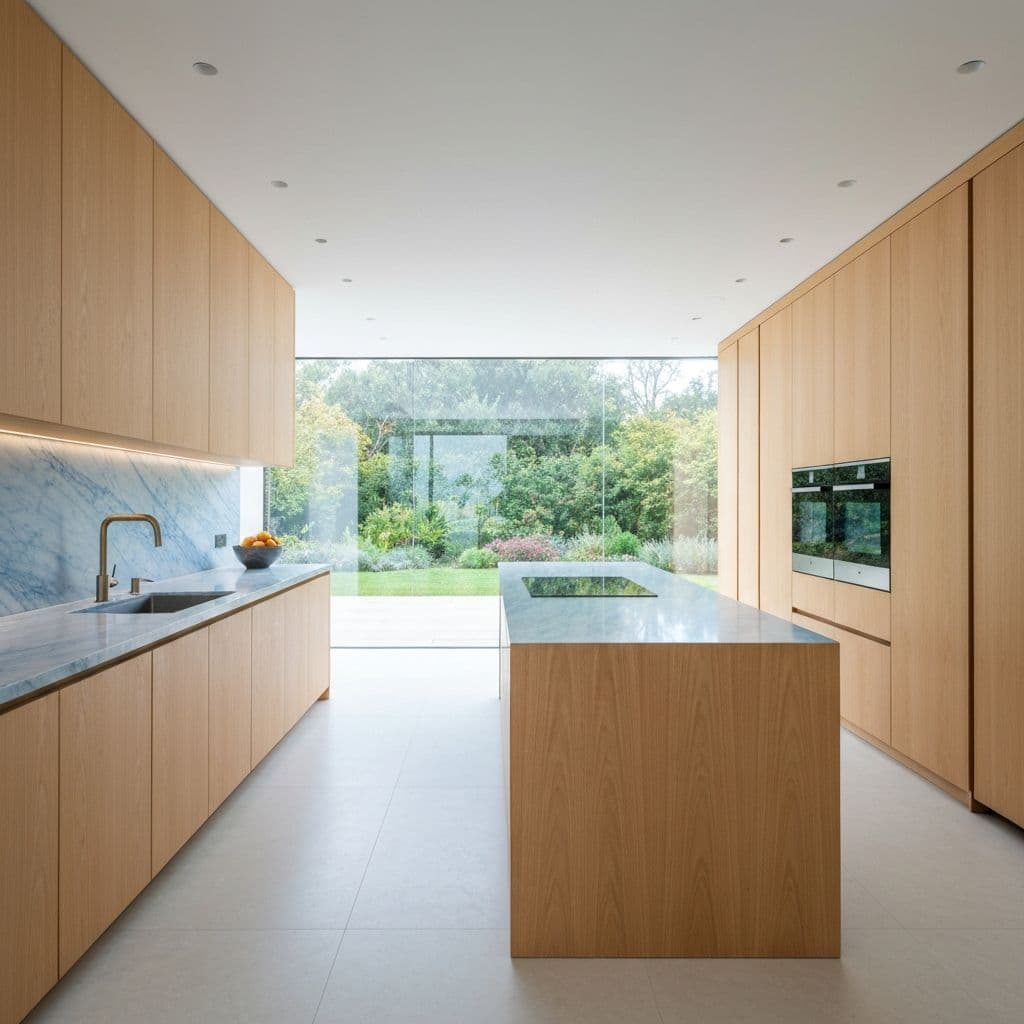
Of every project we fabricate, the most common isn't a new build or a full remodel — it's a straightforward countertop replacement: same kitchen, same cabinets, new stone. And it's popular for good reason. Counters are the most-touched, most-seen surface in the house, so replacing them transforms a kitchen more per dollar than almost any other upgrade. Better yet, it's fast: while a full remodel swallows months, a countertop swap typically runs one to two weeks from measurement to finished kitchen, with just a few hours of actual disruption.
But if you've never been through the process, it's full of unknowns. Can you really keep your cabinets? What happens to the sink? How long is the kitchen out of commission? What does it actually cost in the Triangle? This guide walks through all of it — the signs it's time, the decisions you'll make, the exact step-by-step process we use, and the honest numbers — so you know precisely what you're signing up for before you request a quote.
7 Signs It's Time to Replace Your Countertops
- Cracks, deep chips, or burn marks that repairs can't hide — damage compounds, and a cracked counter can worsen with normal use.
- Permanent staining that no cleaning method fixes (if you haven't tried a poultice yet, read our stain removal guide first — you might save the project).
- Laminate that's peeling, bubbling, or swollen at the seams — water has gotten in, and it only goes one direction from there.
- Tile counters with failing grout — endless scrubbing, harboring bacteria, and dating the whole kitchen.
- A dated look that drags the room down — the 2000s speckled granite or 90s laminate that makes an otherwise fine kitchen feel old.
- You're selling within a few years — new counters are one of the highest-ROI pre-sale upgrades, and 'new quartz countertops' is a listing keyword that works.
- The layout works but the surfaces don't — the strongest sign of all. If cabinets are solid and the flow is fine, replacing only the counters captures most of a remodel's visual impact at a fraction of the cost.
The Big Question: Can You Keep Your Cabinets?
Almost always, yes — and this is the fact that surprises homeowners most. Countertops sit on top of cabinet boxes; they're removed and replaced without disturbing what's below. The requirements are simply that your cabinets are structurally sound, level (or shimmable to level), and staying where they are. Solid-wood and plywood boxes from any era typically qualify easily. During tear-out we occasionally discover water damage around the sink base, which is far better found now than later — minor repairs happen on the spot.
A few honest caveats. Very heavy stone on weak particle-board frames sometimes needs reinforcement — we assess that at template. If you're planning to paint or reface the cabinets, do it *before* install day. And if a layout change is coming (moving the sink, adding an island), do that remodel work first, then template. The order matters: counters are always the last major surface into a kitchen. Our process page shows how replacement slots into bigger projects.
The 6-Step Replacement Process
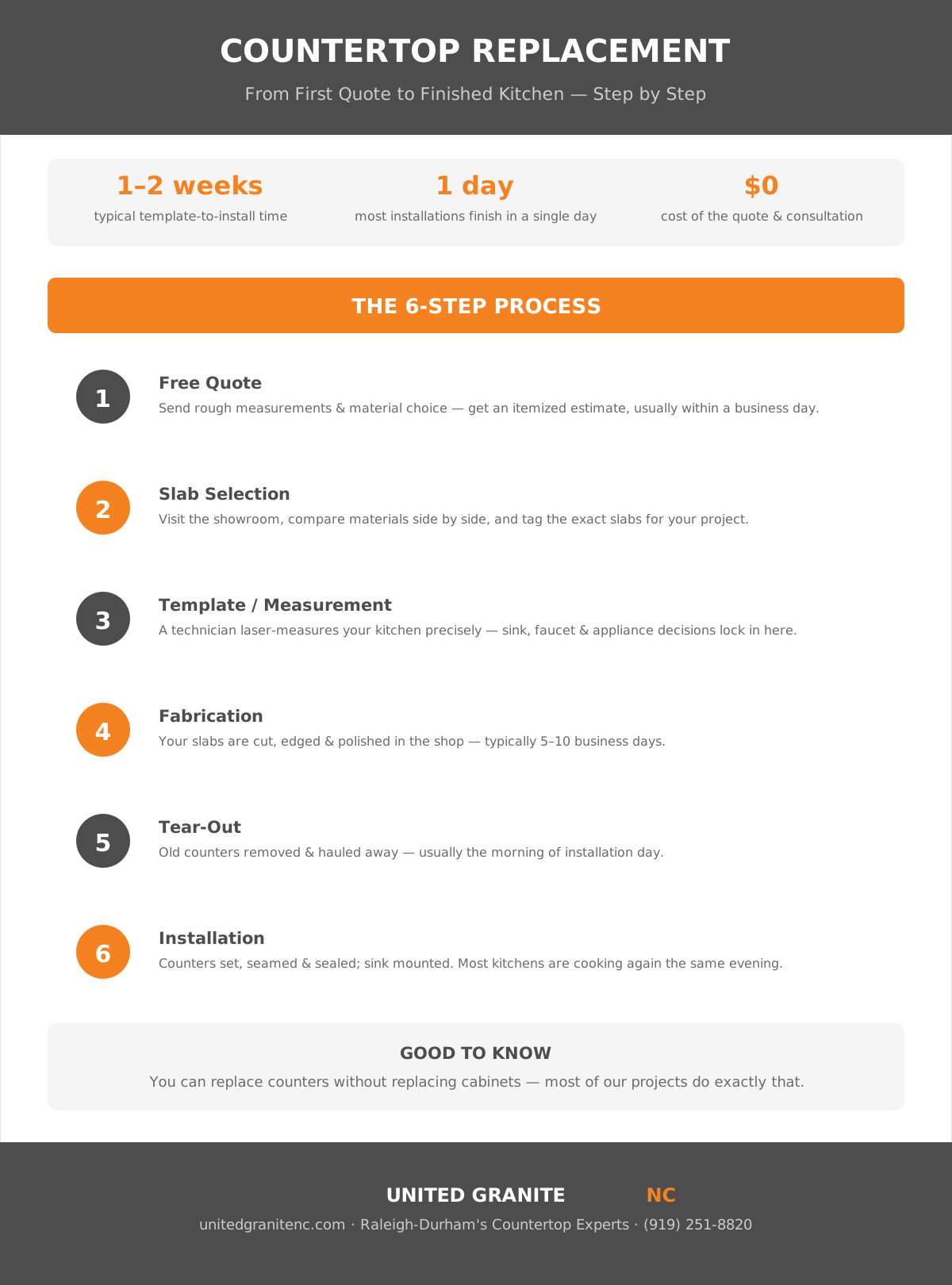
Step 1 — The free quote. You don't need precise measurements to start; rough dimensions sketched on paper, or a photo with approximate lengths, are enough for an initial itemized estimate. Send them through our EZ Quote tool or quote form and you'll typically have numbers within one business day. This is also where we flag anything unusual — extra-long spans, unsupported overhangs, farm-sink conversions — so there are no surprises later.
Step 2 — Slab selection. The fun part. You visit the showroom, compare granite, quartz, quartzite, and porcelain side by side, and — for natural stone — tag the exact slabs that will become your counters. If you're torn between materials, our materials comparison is the homework that makes this visit efficient. Bring a cabinet door and a paint chip; undertones matter.
Step 3 — Template. A technician comes to your home and creates a precise digital template of your existing counters with laser measurement — every wall bow, every corner angle, every cutout. This is decision-lock day: sink model, faucet holes, edge profile, backsplash height, and overhangs all finalize here, because the stone gets cut to these specs. If you're switching to an undermount sink or a workstation sink, have it on site at template. The visit takes about an hour, and your old counters stay in place — the kitchen keeps working.
Step 4 — Fabrication. Back at the shop, your slabs are cut, cutouts milled, edges profiled and polished. Typical fabrication runs 5–10 business days depending on material and complexity — quartzite and porcelain sit at the longer end for the tooling reasons covered in our porcelain guide. Full detail on scheduling lives in our installation timeline guide.
Step 5 — Tear-out. Usually the morning of install day. Crews disconnect plumbing, cut the old tops free, remove and haul them away, and prep the cabinet boxes. A typical kitchen tear-out takes one to two hours. This is the loud part of the project; by lunchtime it's history.
Step 6 — Installation. New counters are set, leveled, and seamed; the sink is mounted and supported; seams are color-matched and polished; natural stone gets its first sealing. Most kitchens install in 2–6 hours. Plumbing reconnection follows (same day or next, depending on your plumber arrangement — silicone around the sink needs a few hours to cure), and you're cooking dinner on the new counters that evening or the next.
What Countertop Replacement Costs in the Triangle
A typical Raleigh-Durham kitchen carries 40–60 square feet of counter space. At current installed prices — entry granite from the $40s per square foot, quartz $50–$150, quartzite $70–$200+ — most full-kitchen replacements land between $2,500 and $7,500, with premium-stone or large kitchens ranging higher. Installed pricing at a reputable shop includes templating, fabrication, standard edges, installation, and sealing; ask specifically about tear-out and haul-away, sink cutouts, and plumbing reconnection, which vary by quote. Our pricing guide breaks down every line item with real market ranges.
Two budget notes worth knowing. First, replacement is where the *keep-the-cabinets* math shines: the same visual transformation inside a full remodel would carry a five-figure price tag. Second, small scope changes swing costs meaningfully — a full-height backsplash, a waterfall end, or an exotic slab can each add 15–40% — so decide the must-haves versus nice-to-haves before template day locks the spec.
Replacing Laminate or Tile with Stone: What Changes
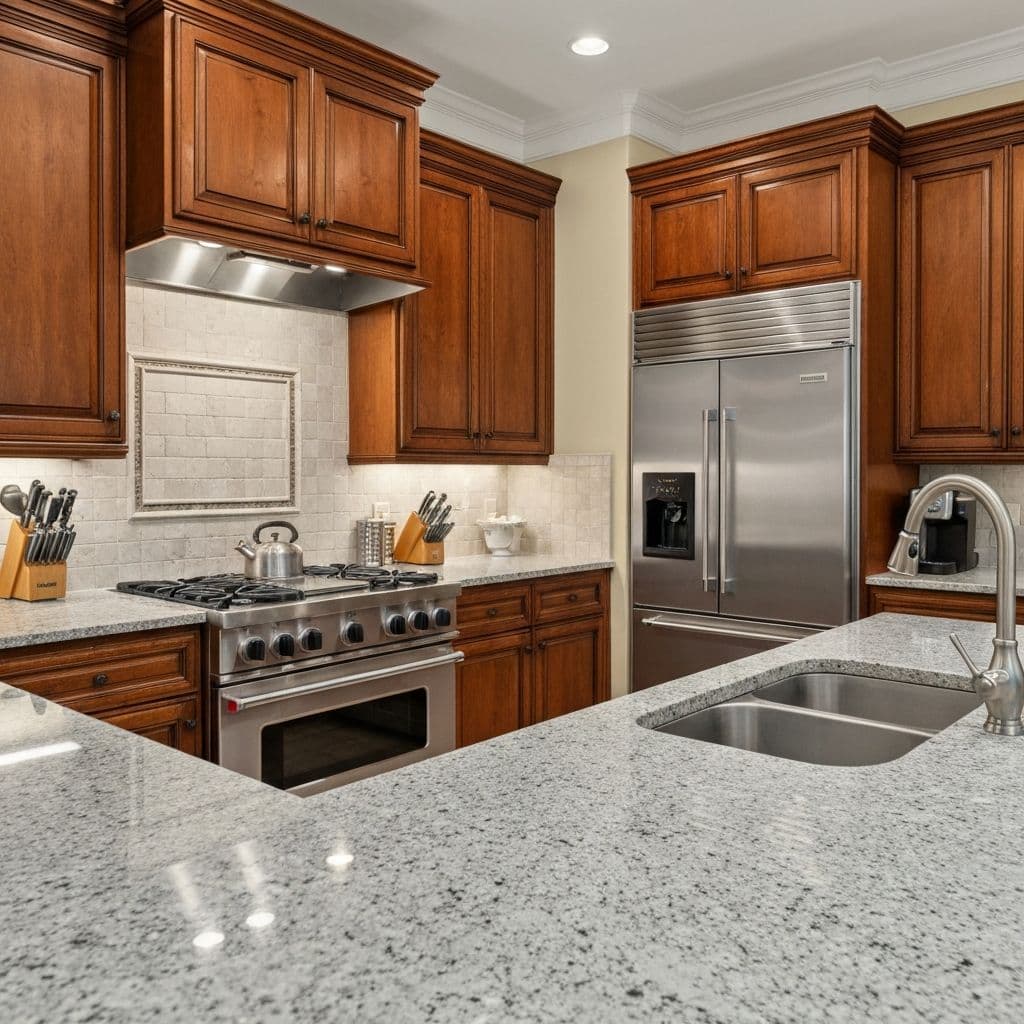
Most replacements we do aren't stone-for-stone — they're an upgrade from laminate or tile to stone, and a few things work differently. Weight is the big one: stone counters weigh several times what laminate does, so cabinet condition matters more; we check boxes and add reinforcement where spans need it, typically at no drama and minor cost. Sinks almost always change: laminate kitchens have drop-in sinks, and stone is the moment nearly everyone switches to an undermount — cleaner look, and you can sweep crumbs straight into the basin. Backsplashes open up too: laminate's integrated 4-inch lip disappears, freeing the wall for tile to the cabinets or a matching stone splash, per current design trends.
Tile-counter replacements carry one extra step: the old mortar bed and backer often come off with more demolition mess than a laminate tear-out, and occasionally reveal surprises in the substrate underneath. Crews handle all of it — just know the tear-out phase may run a bit longer, and the transformation is even more dramatic. Nothing dates a kitchen like grouted tile counters; nothing modernizes one like a single seamless slab.
Replacement vs. Refinishing vs. Overlay: The Honest Comparison
You'll encounter cheaper-sounding alternatives while researching, so here's the straight assessment. Refinishing/painting kits ($100–$600 DIY) coat old laminate with epoxy that mimics stone in photos; in real kitchens the coating scratches, can't take heat, and typically looks like what it is within a couple of years. Fine for a rental turn or a short-term cosmetic fix; not a substitute for replacement. Overlay systems (engineered stone sheets glued over existing counters) run $2,000–$5,000 installed — genuine stone surface, but with limited edge options, dependency on the old counter's flatness underneath, and a price that overlaps entry-level real replacement. Our honest take: if the budget reaches overlay territory, full replacement with entry granite or builder-grade quartz almost always delivers more value, more options, and a longer life.
The one alternative we genuinely endorse: doing nothing yet, strategically. If your counters are structurally fine and only the stains bother you, spend thirty minutes with our stain removal guide before spending thousands. And if a full kitchen remodel is realistically coming within two years, wait and do the counters once, last, in the final layout.
The Decisions That Deserve Ten Extra Minutes
A handful of small choices at template time shape the kitchen for the next twenty years, and they're worth deliberate thought rather than on-the-spot answers. Edge profile: eased and pencil edges read modern and are easiest to live with; ogee reads traditional; mitered builds visual thickness — full rundown in our edge guide. Overhang: standard is 1.5 inches; seating areas want 10–12 inches (with supports past 10). Faucet holes: count everything — main faucet, soap dispenser, filtered-water tap, air gap — because stone doesn't forgive an afterthought. Seam placement: ask where seams will fall and push them away from sight lines and sink cutouts. Backsplash: none, 4-inch stone, tile-ready, or full-height slab — each changes both cost and cleaning life.
None of these carry a wrong answer, but all of them carry a *default* answer if you don't ask — and defaults optimize for fabrication convenience, not necessarily for your kitchen. Ten minutes of intentional choices at template is the cheapest design consulting you'll ever get.
What the ROI Actually Looks Like
Kitchens sell houses, and counters headline kitchens. Remodeling-industry cost-versus-value data consistently puts minor kitchen refreshes — of which countertop replacement is the anchor — among the highest-recouping home projects, typically returning the large majority of their cost at sale, and often accelerating the sale itself. In our local market, listing agents actively request 'new quartz' or 'new granite' language because buyers filter for it. The strategic play for pre-sale sellers: neutral, warm-toned quartz or granite (the safe favorites from our materials guide), standard edges, no exotic upgrades — maximum buyer appeal per dollar. For stay-put owners the ROI math is simpler still: it's the surface you touch every day, and two decades of daily enjoyment amortizes a few thousand dollars into pocket change per week.
How to Prepare for Install Day
- Empty the base cabinets — vibration from tear-out travels, and crews need the sink base accessible for plumbing work.
- Clear a path from the driveway to the kitchen; stone pieces are large, heavy, and carried by hand.
- Plan for no sink for a few hours (occasionally overnight while silicone cures) — do the dishes beforehand.
- Secure pets somewhere calm; doors will be open and the work is noisy for the first couple of hours.
- Confirm the small decisions — faucet hole count, soap dispenser, backsplash height — before the crew arrives; changes after cutting are expensive or impossible.
Common Replacement Mistakes to Avoid
- Reusing a tired sink with new stone. The sink mounts to the counter; swapping it later means unmounting stone. Install day is the moment to upgrade — see kitchen sinks and faucets.
- Skipping the showroom visit. A 3-inch sample can't show slab movement. One hour in person prevents years of mild regret.
- Choosing material by price alone. The cheapest quote often excludes tear-out, sink cutouts, or sealing. Compare itemized scope, not bottom lines — and weigh material fit using our materials guide.
- Renovating in the wrong order. Cabinets, layout, and painting come first; counters last; tile backsplash after counters. Getting this backward costs real money.
- Not asking who installs. Subcontracted install crews are where quality varies most. Ask if the fabricator's own team does the installation. (Ours does.)
Beyond the Kitchen: Vanities, Bars & Outdoor Surfaces
The same six-step process covers every other counter in the house, usually with less complexity and cost. Bathroom vanities are the most popular add-on — small square footage means even premium stone stays affordable, and many clients bundle a vanity or two into a kitchen project to share the template and install trips (which saves real money — ask when quoting). Laundry rooms, bars, and butler's pantries follow the same logic. Outdoor kitchens are their own conversation: material selection narrows to UV-stable choices like granite and porcelain, but the quote-template-fabricate-install rhythm is identical. If you're planning multiple surfaces over the next year or two, mention it upfront — slab planning across projects lets you pull consecutive slabs from the same lot so everything matches.
On timing: there's no wrong season for an indoor replacement, but there are smart ones. Late fall and winter are typically the quietest fabrication windows — shorter lead times and the kitchen ready before holiday hosting, if you start early enough. Spring and summer book heavier with remodel season and new construction. Whatever the season, templates lock your place in the fabrication queue, so the free quote costs nothing and the earlier steps buy you scheduling flexibility.
Ready to See What Your Kitchen Could Look Like?
The easiest first step costs nothing: rough measurements and a material idea get you an itemized quote, usually within one business day, through our free quote form or EZ Quote. If you're still choosing materials, browse real Triangle-area replacements in our portfolio, preview stones on a kitchen like yours in the visualizer, or visit the showroom — we serve the entire region from Raleigh and Durham to Cary, Apex, Chapel Hill and beyond. One to two weeks from now, this could be done.